
.png)
Why Psoriasis Looks Different From Ordinary Dry Skin
Introduction
Many people confuse psoriasis with common dry skin because both conditions may involve flaking, irritation, or rough patches. However, psoriasis is very different from occasional dryness.
Dry skin usually develops when the skin loses moisture because of weather changes, harsh products, dehydration, or environmental exposure. Psoriasis, on the other hand, is a chronic inflammatory skin condition linked to immune system activity.
.jpg)
Understanding the differences between psoriasis and ordinary dry skin can help explain why psoriasis often appears thicker, more inflamed, and more persistent than regular skin dryness.
Psoriasis is not contagious and cannot spread from person to person.
Understanding Ordinary Dry Skin
Dry skin is extremely common and may affect people of all ages. It often appears during colder seasons or in environments with low humidity.
Healthy skin naturally contains oils and moisture that help maintain flexibility and protection. When moisture levels decrease, the skin barrier becomes weaker and symptoms of dryness may appear.
Common signs of dry skin include:
- Mild roughness
- Tight feeling after washing
- Light flaking
- Temporary irritation
- Small dry patches
In most cases, dry skin appears evenly across the surface and does not create thick raised plaques.
What Makes Psoriasis Different?
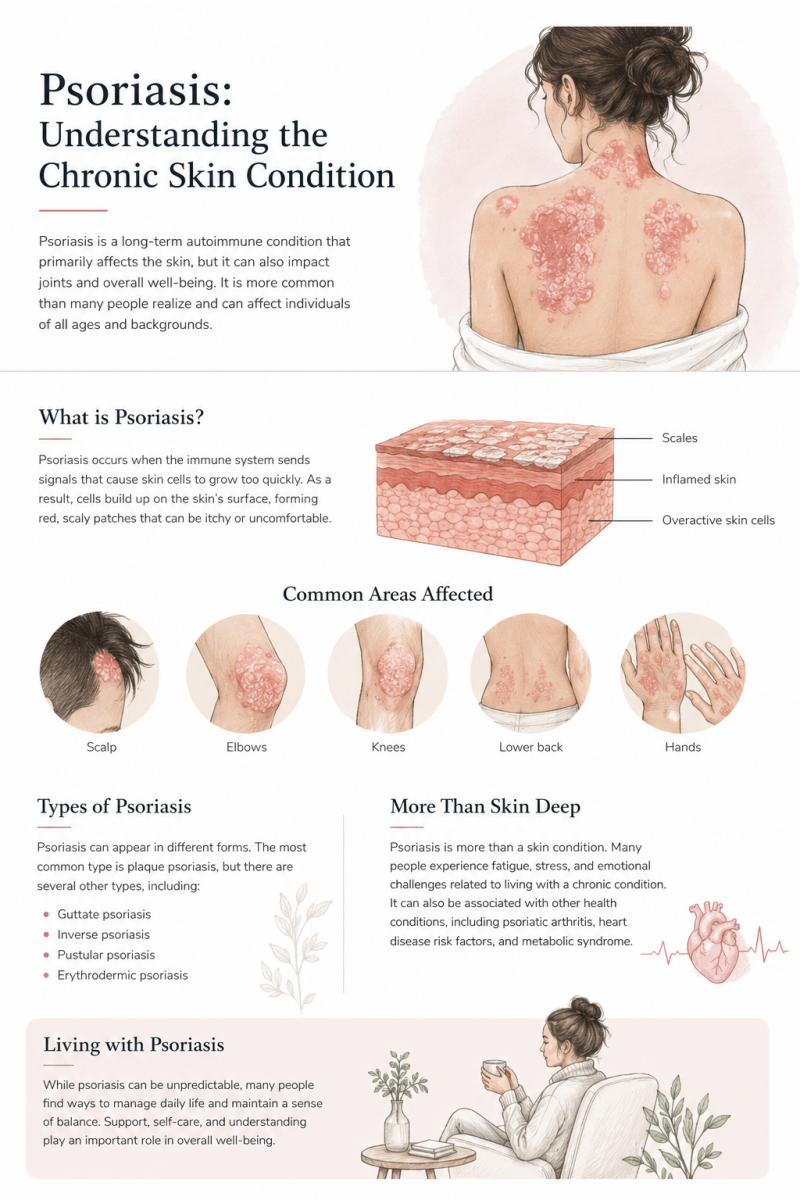
Psoriasis develops because skin cells reproduce much faster than normal.
Instead of shedding naturally over several weeks, new skin cells move to the surface within only a few days. Because these cells accumulate too quickly, visible scaling and thickened plaques begin to form.
Unlike simple dryness, psoriasis involves ongoing inflammation beneath the skin surface.
Common psoriasis symptoms include:
- Thick raised plaques
- Red or inflamed skin
- Silvery-white scales
- Cracking or peeling
- Persistent itching
- Burning or discomfort
Symptoms may appear in cycles called flare-ups, where the condition temporarily becomes more noticeable.
Dry Skin vs Psoriasis: Key Differences
Although they can sometimes look similar from a distance, psoriasis and dry skin behave very differently.
Texture Comparison
Ordinary Dry Skin
- Slightly rough texture
- Mild flaking
- Thin dry patches
- Usually smooth underneath
Psoriasis
- Thickened plaques
- Heavy scaling
- Raised rough surface
- Dense skin buildup
Psoriasis plaques are often much more visible and structured compared with ordinary dryness.
Color and Appearance
Dry Skin
Dry skin usually appears:
- Pale or slightly dull
- Mildly flaky
- Lightly irritated
- Even in color
Psoriasis
Psoriasis may appear:
- Bright red or pink
- Covered with silvery scales
- Inflamed around plaque edges
- Thickened and uneven
The contrast between normal skin and affected areas is often more obvious in psoriasis.
Duration of Symptoms
One major difference is how long symptoms last.
Dry Skin
Dry skin symptoms are often temporary and may improve naturally when environmental conditions change.
Psoriasis
Psoriasis is a chronic long-term condition. Symptoms may improve temporarily and later return during flare-ups.
Some individuals experience recurring symptoms for many years.
Common Areas Affected
Dry skin and psoriasis may affect similar body areas, but psoriasis commonly targets certain regions more aggressively.
Areas Often Affected by Dry Skin
- Hands
- Legs
- Arms
- Face
Areas Frequently Affected by Psoriasis
- Scalp
- Elbows
- Knees
- Lower back
- Hands and feet
- Nails
Psoriasis plaques often develop on pressure points or areas exposed to friction.
Itching and Discomfort
Both conditions may cause itching, but the intensity often differs.
Dry Skin Itching
Dry skin usually causes mild irritation or temporary itchiness.
Psoriasis Discomfort
Psoriasis may cause:
- Persistent itching
- Burning sensations
- Tightness
- Skin sensitivity
- Cracking discomfort
In some cases, symptoms may interfere with sleep or daily activities.
The Role of Inflammation
Inflammation is one of the biggest distinctions between psoriasis and ordinary dry skin.
Dry skin mainly results from moisture loss and barrier weakness.
Psoriasis involves immune-related inflammation that increases skin cell production and creates visible plaques.
This inflammatory activity is why psoriasis often appears thicker, redder, and more irritated than standard dryness.
Emotional and Social Impact
Visible skin changes can affect confidence and emotional well-being.
People living with psoriasis may experience:
- Self-consciousness
- Frustration during flare-ups
- Clothing discomfort
- Social anxiety
- Stress linked to appearance changes
Because psoriasis is more noticeable than ordinary dry skin, emotional effects may become more significant over time.
Common Psoriasis Triggers
Certain factors may worsen psoriasis symptoms or trigger flare-ups.
These may include:
- Emotional stress
- Cold weather
- Skin injuries
- Smoking
- Certain infections
- Excessive alcohol consumption
Triggers vary from person to person.
Why Psoriasis Is Often Misunderstood
Many people incorrectly assume psoriasis is simply severe dry skin. However, psoriasis involves chronic inflammation and accelerated skin cell turnover.
Understanding these differences helps reduce misunderstanding and improves awareness surrounding chronic skin conditions.
Conclusion
Although psoriasis and dry skin may share some visible similarities, they are very different conditions.
Dry skin is usually temporary and related to moisture loss, while psoriasis is a chronic inflammatory condition associated with rapid skin cell buildup and immune system activity.
Psoriasis commonly causes thick plaques, scaling, redness, and long-term flare-ups that differ significantly from ordinary dryness.
Greater awareness of these differences can help people better understand the visible and emotional effects of psoriasis.
.png)
.png)
.png)
.png)


