
.png)
Why Does the Skin Keep Flaking? A Closer Look at Seborrheic Dermatitis
Not every flaky scalp is simply “dry skin.” In many cases, recurring flakes, redness, and irritation may actually be linked to seborrheic dermatitis — a chronic inflammatory condition that affects millions of people worldwide.
Because symptoms often come and go, many individuals ignore the condition for years without realizing that the skin is reacting to deeper inflammatory changes beneath the surface.
Understanding Seborrheic Dermatitis
Seborrheic dermatitis is a common skin disorder that typically develops in areas where the skin produces more oil. The condition is associated with inflammation, scaling, and irritation that may vary from mild to severe.
It most commonly affects:
- Scalp
- Hairline
- Eyebrows
- Around the nose
- Ears
- Beard region
- Upper chest
The appearance may differ from person to person, but redness and flaking are among the most recognizable features

Common Signs of the Condition
Seborrheic dermatitis often develops gradually. Some people notice only mild dandruff-like flakes, while others experience more visible skin irritation.
Typical symptoms may include:
- Persistent flaking
- Greasy or oily patches
- Red or inflamed skin
- Itching
- Sensitive scalp
- Scaling around facial folds
Symptoms may temporarily improve before returning again during flare-ups.
What Causes Seborrheic Dermatitis?
The exact cause remains unclear, but experts believe multiple factors contribute to the condition.
Possible contributing factors include:
- Overactive oil glands
- Natural yeast growth on the skin
- Immune system response
- Stress and emotional fatigue
- Climate changes
- Hormonal influence
- Genetic predisposition
Seborrheic dermatitis is not contagious, and it is not caused by poor cleanliness.
More Than a Scalp Condition
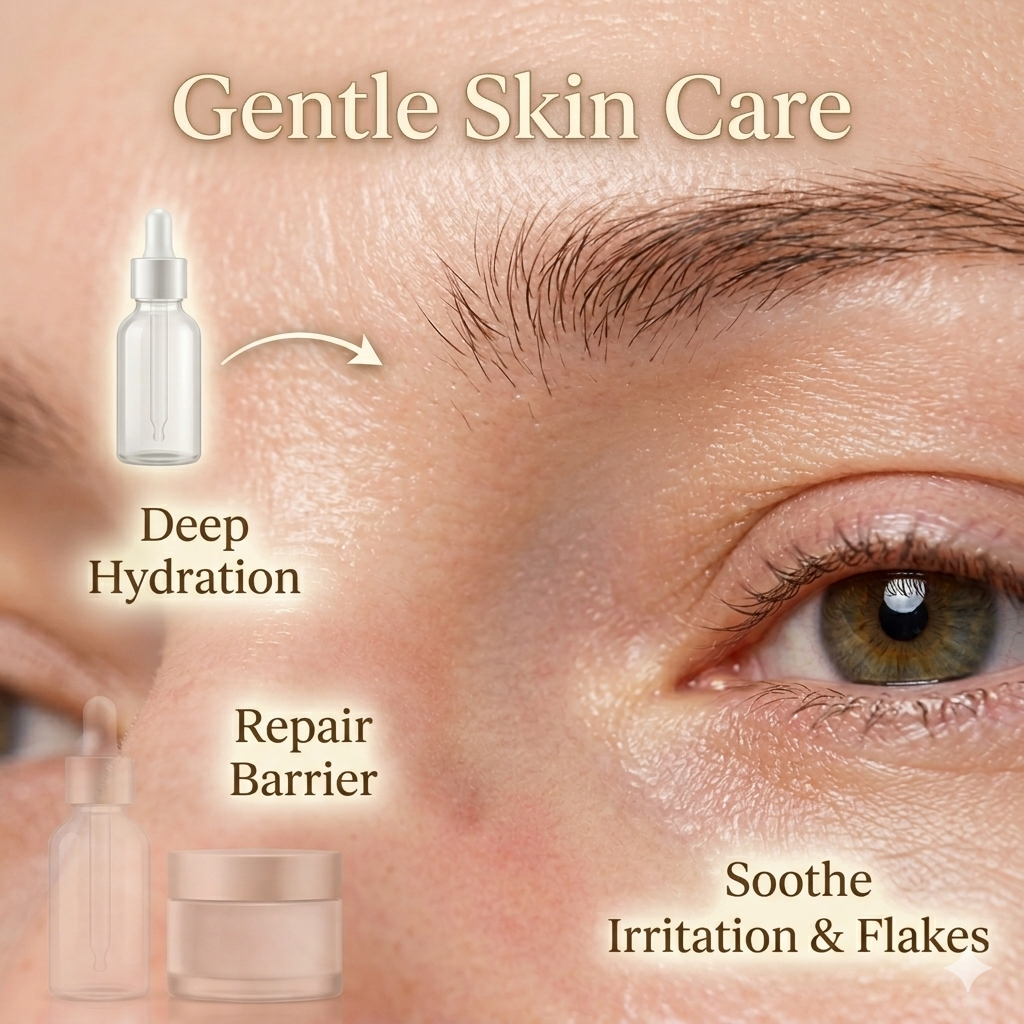
Although the scalp is the most recognized area, seborrheic dermatitis frequently affects the face as well. Redness and flaking around the eyebrows or sides of the nose are particularly common.
In infants, the condition often appears as thick scaling on the scalp and is commonly known as cradle cap.
Why Do Flare-Ups Keep Returning?
One of the most frustrating aspects of seborrheic dermatitis is its recurring nature. Symptoms may suddenly worsen even when routines remain unchanged.
Common flare-up triggers may include:
- Stress
- Sleep deprivation
- Cold weather
- Fatigue
- Seasonal transitions
For many people, the condition behaves unpredictably — almost like the skin enjoys keeping its own mysterious schedule without informing anyone first.
When Is Professional Evaluation Important?
A medical evaluation may be helpful if:
- Symptoms become persistent
- Redness spreads or worsens
- The scalp becomes painful
- Facial irritation increases
- Flaking becomes severe
- Other skin conditions are suspected
Because seborrheic dermatitis can resemble eczema, psoriasis, or fungal conditions, accurate diagnosis is important.
Final Thoughts
Seborrheic dermatitis is a chronic inflammatory skin condition that extends beyond ordinary dandruff. Its recurring flare-ups and visible symptoms can affect both comfort and confidence, especially when facial areas are involved.
While the condition is common, the skin’s reactions can sometimes feel unexpectedly dramatic — as though it has decided to express every emotion through flakes and redness instead of words.
.png)
.png)
.png)
.png)


