
.png)
Why Does Eczema Keep Coming Back? Understanding This Chronic Skin Condition
Eczema, also known as atopic dermatitis, is a common chronic inflammatory skin condition that causes dry, itchy, red, and inflamed skin. It affects millions of people worldwide and often starts in childhood, though it can appear at any age. Many people wonder why their eczema flares up repeatedly and never seems to disappear completely. The answer lies in its nature as a chronic condition rather than a one-time issue.
What Is Eczema and Why Is It Chronic?
Eczema occurs when the immune system overreacts and the skin’s protective barrier is weakened. This barrier (made of lipids and proteins like filaggrin) normally keeps moisture in and irritants out. In people with eczema, genetic factors often make this barrier defective, allowing easier entry for allergens, bacteria, and irritants.
Because it is rooted in genetics and immune function, eczema doesn’t have a permanent cure for most people. Symptoms can improve or even go into remission for months or years, but they often return when triggers activate the underlying inflammation.
Why Does Eczema Recur Again and Again?
Here are the main reasons eczema flares keep returning:
- Persistent Weak Skin Barrier — Even after a flare clears, the barrier may not fully repair, making the skin vulnerable to future issues.
- Ongoing or Hidden Triggers — Exposure to personal triggers reignites inflammation. Common ones include:
- Irritants: Harsh soaps, detergents, fragrances, wool clothing.
- Allergens: Dust mites, pollen, pet dander, mold, certain foods (especially in children).
- Environmental Factors: Dry/cold weather, low humidity, heat/sweat, air pollution.
- Stress and Emotions: High stress raises cortisol and inflammatory chemicals.
- Infections: Colds, bacteria (like staph), or viruses.
- Other: Hormonal changes, sweat, or incomplete treatment.
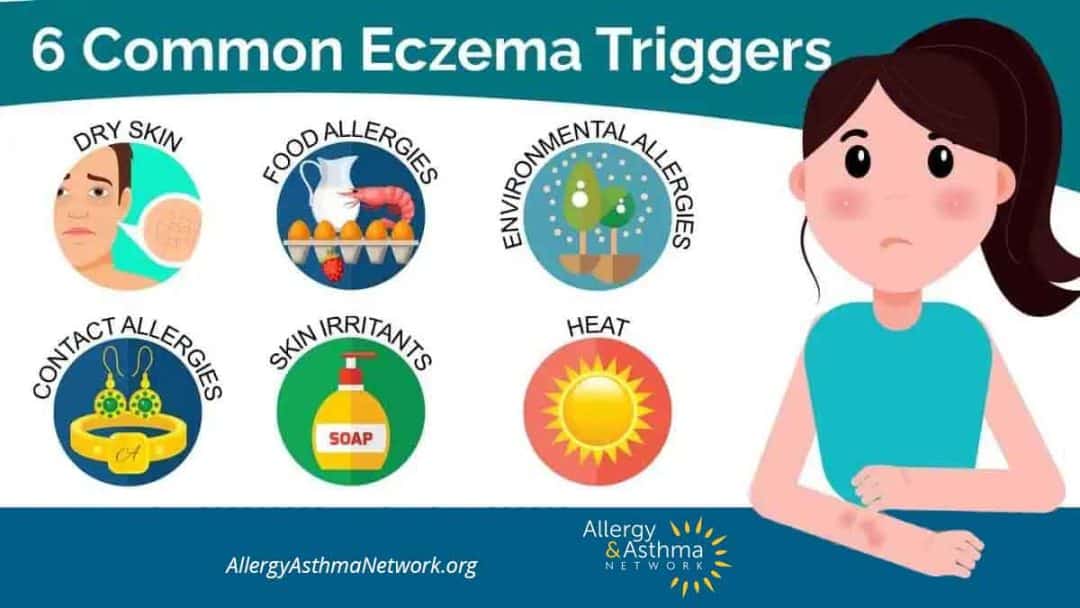
Common Eczema Triggers (infographics above): Identify your personal triggers through a symptom diary.
- Incomplete Treatment — Stopping medication too soon or not moisturizing daily allows low-level inflammation to build up.
- Immune System Sensitivity — Eczema involves an overactive immune response that can flare with even minor provocations.
When to See a Doctor
Consult a dermatologist if:
- Flares are frequent or severe.
- Over-the-counter treatments aren’t enough.
- Signs of infection (oozing, crusting, fever) appear.
- It affects sleep, daily life, or causes emotional distress.
Living Better with Eczema
Eczema may be lifelong for many, but with understanding and proactive care, most people can control symptoms effectively and enjoy clear skin for long periods. Track your triggers, stick to your skincare routine, and work with healthcare professionals for a personalized plan.
This article is for informational purposes only and is not a substitute for professional medical advice.
Disclaimer: This article is for educational purposes only and does not constitute medical advice. It is not a substitute for professional diagnosis or treatment. Please consult your dermatologist before making any healthcare decisions. We are not responsible for any damages arising from the use of this information
.png)
.png)
.png)
.png)
.png)


