
.png)
Understanding Psoriasis: A Chronic Skin Condition That Goes Beyond the Surface
Introduction
Psoriasis is a long-term inflammatory skin condition that affects millions of people worldwide. It is commonly recognized by patches of thickened, red skin covered with silvery-white scales. While psoriasis often appears on the elbows, knees, scalp, and lower back, it can develop on many parts of the body.
The condition is not contagious, and it can affect people of all ages. Symptoms may vary from mild irritation to widespread skin involvement that impacts daily comfort and confidence. Understanding psoriasis is important because it is more than a cosmetic concern — it reflects changes happening within the immune system and the skin itself.
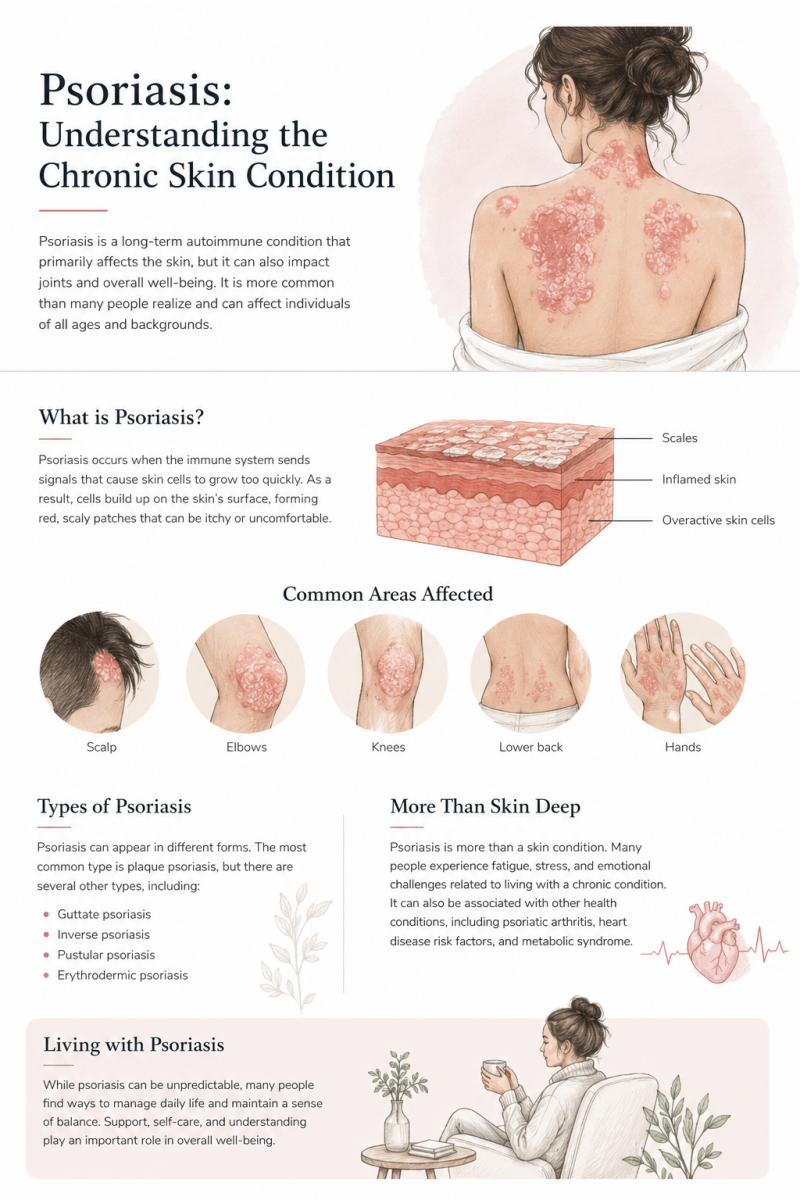
What Is Psoriasis?
Psoriasis is a chronic autoimmune-related skin disorder that speeds up the life cycle of skin cells. Normally, skin cells grow and shed gradually over several weeks. In people with psoriasis, this process happens much faster, causing skin cells to build up on the surface.
This rapid buildup leads to:
- Thick, raised plaques
- Red or inflamed skin
- Dryness and scaling
- Flaking or cracking
- Itching or burning sensations
The appearance and severity of psoriasis can differ greatly from one person to another.
Common Symptoms of Psoriasis
The symptoms of psoriasis are not always the same. Some individuals may experience only a few small patches, while others develop larger areas of affected skin.
Common signs include:
Red Patches with Silvery Scales
One of the most recognizable symptoms is the appearance of red plaques covered with silvery or white scales.
Dry or Cracked Skin
The skin may become extremely dry, sometimes leading to painful cracks.
Itching and Irritation
Many people report itching, stinging, or burning sensations around affected areas.
Thickened Nails
Psoriasis can also affect fingernails and toenails, causing pitting, discoloration, or thickening.
Scalp Involvement
Scalp psoriasis may appear as flaky patches that resemble severe dandruff.
Different Types of Psoriasis
Psoriasis can appear in several forms, each with distinct characteristics.
Plaque Psoriasis
This is the most common type. It causes raised, inflamed plaques covered with scales.
Guttate Psoriasis
Guttate psoriasis often appears as small, drop-shaped spots across the skin.
Inverse Psoriasis
This form develops in skin folds such as the armpits, groin, or under the breasts.
Pustular Psoriasis
Pustular psoriasis is characterized by white pustules surrounded by red skin.
Erythrodermic Psoriasis
A rare but severe form that can involve widespread redness and peeling.
Causes and Triggers
The exact cause of psoriasis is not fully understood, but researchers believe it involves a combination of immune system activity and genetic factors.
Several triggers may contribute to flare-ups, including:
- Emotional stress
- Skin injuries
- Cold or dry weather
- Certain infections
- Smoking
- Excessive alcohol consumption
Not every trigger affects every person in the same way.
How Psoriasis Affects Daily Life
Living with psoriasis can sometimes affect emotional well-being and social confidence. Visible skin changes may lead to embarrassment, frustration, or stress for some individuals.
The condition may also interfere with:
- Sleep quality
- Physical comfort
- Clothing choices
- Workplace confidence
- Social interactions
Because psoriasis is chronic, symptoms may come and go over time in cycles known as flare-ups and remission periods.
Psoriasis and the Immune System
Psoriasis is closely linked to immune system activity. In affected individuals, immune signals mistakenly accelerate skin cell production, resulting in inflammation and visible skin changes.
This connection explains why psoriasis is considered more than a surface-level skin condition.
When to Seek Medical Evaluation
People experiencing persistent skin irritation, scaling, or unexplained rashes should seek evaluation from a qualified healthcare professional. Early assessment can help distinguish psoriasis from other skin conditions such as eczema, fungal infections, or dermatitis.
Conclusion
Psoriasis is a chronic inflammatory skin condition that can vary widely in appearance and severity. Although it is not contagious, it can significantly influence physical comfort and emotional well-being.
Learning more about psoriasis helps increase awareness, reduce misunderstanding, and support individuals living with this condition.
.jpg)
.png)
.png)
.png)
.png)


