
.png)
Psoriasis vs Healthy Skin: Understanding the Key Differences
Introduction
Healthy skin protects the body, renews itself gradually, and maintains a smooth surface. In psoriasis, however, the skin behaves differently due to abnormal immune activity and accelerated skin cell production.
Psoriasis is a chronic inflammatory skin condition that can cause thickened plaques, scaling, redness, and discomfort. Comparing healthy skin with psoriatic skin helps explain why symptoms appear and how the condition affects daily life.
Unlike contagious skin infections, psoriasis cannot spread through touch or close contact.
.png)
Healthy Skin vs Psoriatic Skin
Healthy skin follows a carefully balanced renewal process that keeps the skin surface smooth, flexible, and protected. Skin cells normally grow in deeper layers and slowly move upward before naturally shedding away.
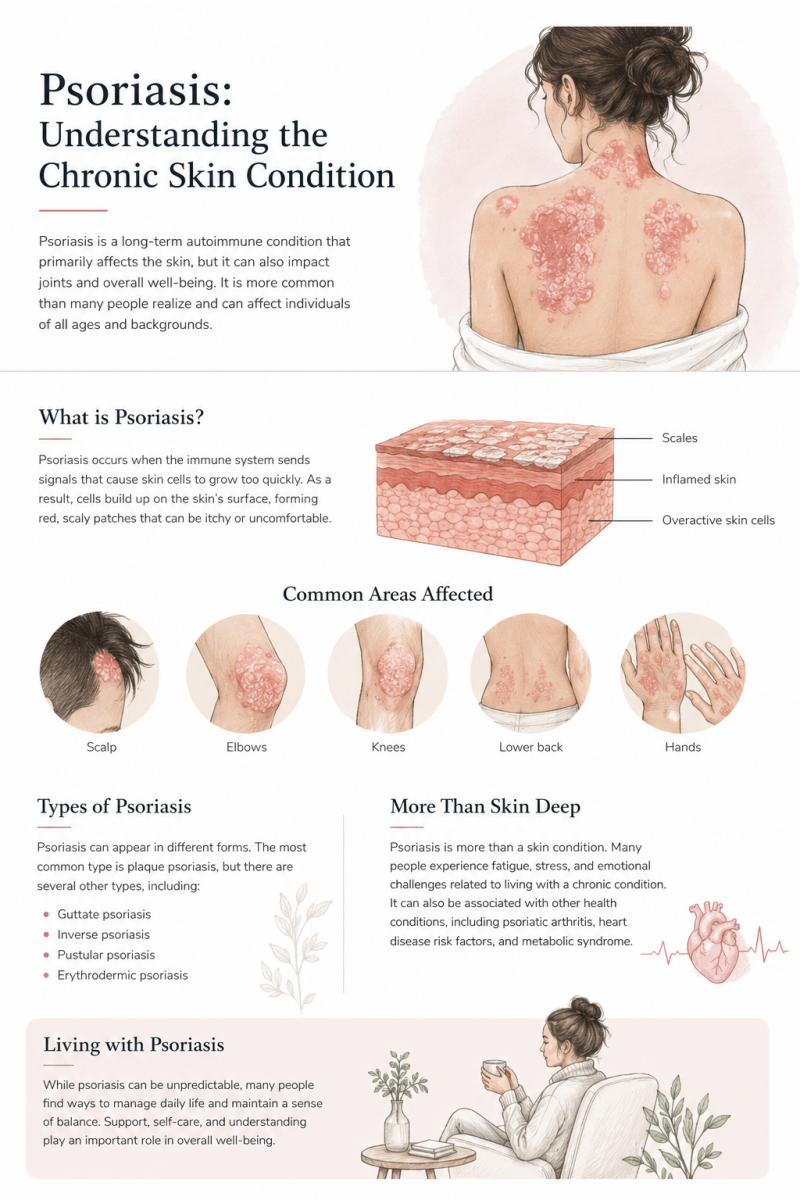
In psoriasis, this cycle becomes dramatically accelerated. Instead of renewing over several weeks, skin cells rise to the surface far too quickly. Because the body cannot shed these cells fast enough, they accumulate and create visible plaques, scaling, and inflammation.
This difference between healthy skin and psoriatic skin explains why psoriasis often appears rough, irritated, and thickened.
Healthy Skin
Healthy skin usually has several important characteristics:
- Smooth texture
- Balanced hydration
- Even coloration
- Flexible outer barrier
- Minimal flaking or irritation
The outer layer of healthy skin works as a protective shield against environmental irritants, bacteria, and dryness. Skin cells are continuously renewed without causing visible buildup.
Healthy skin also maintains moisture effectively, which helps prevent cracking and sensitivity.
Psoriatic Skin
Psoriatic skin behaves differently because inflammation disrupts the natural balance of skin renewal.
Common characteristics include:
- Thickened plaques
- Red or pink inflamed areas
- Silvery-white scales
- Dryness and flaking
- Sensitive or itchy skin
- Cracking in severe dry areas
In some individuals, plaques remain small and localized. In others, psoriasis may spread across larger body regions.
The appearance of psoriasis can also change over time. Some flare-ups are mild, while others become more noticeable due to stress, environmental factors, or immune activity.
Comparing Skin Cell Turnover
One of the biggest differences between healthy skin and psoriasis involves skin cell turnover.
Healthy Skin Renewal
In healthy skin:
- Skin cells develop gradually
- Old cells shed naturally
- The surface remains balanced
- Irritation is limited
- Inflammation is minimal
Psoriasis Skin Renewal
In psoriasis:
- Skin cells multiply too quickly
- Cells accumulate on the surface
- Plaques and scaling become visible
- Inflammation increases
- Skin becomes thicker and rougher
This rapid buildup is one of the defining features of psoriasis.
Differences in Skin Texture
Texture changes are often easy to notice when comparing healthy skin and psoriatic skin.
Healthy Skin Texture
Healthy skin typically feels:
- Soft
- Flexible
- Smooth
- Even in thickness
- Comfortable without persistent irritation
Psoriatic Skin Texture
Psoriatic skin may feel:
- Rough or raised
- Thickened
- Dry and flaky
- Tight or sensitive
- Irritated during flare-ups
These texture changes occur because of excessive skin cell buildup and ongoing inflammation.
Appearance Comparison
The visual appearance of psoriasis is very different from normal skin.
Healthy skin usually maintains a natural and even tone, while psoriasis may cause:
- Red patches
- White or silvery scales
- Visible flaking
- Inflamed borders
- Thick plaque formation
The contrast can range from mild discoloration to widespread scaling depending on symptom severity.
Commonly Affected Areas
Psoriasis can affect many different body regions.
Scalp
Scaling and redness around the scalp may resemble severe dandruff.
Elbows and Knees
These are among the most common areas where plaques develop.
Lower Back
Dry, inflamed patches often appear across the lower back.
Hands and Feet
Some individuals experience painful cracking or peeling skin.
Nails
Nail psoriasis may lead to thickening, pitting, or discoloration.
Texture and Appearance Comparison
The texture of healthy skin and psoriatic skin is often noticeably different.
Healthy Skin Texture
- Soft and smooth
- Even surface
- Minimal visible flaking
- Natural moisture balance
Psoriasis Texture
- Raised plaques
- Rough scaling
- Excessive dryness
- Flaking or peeling areas
These changes are caused by inflammation and abnormal skin cell turnover.
The Role of the Immune System
Psoriasis is closely linked to immune system activity. Immune signals mistakenly instruct skin cells to reproduce too quickly.
Healthy skin maintains a slower and balanced cycle, while psoriasis accelerates the process dramatically.
This difference explains why psoriatic skin becomes thickened, inflamed, and visibly irritated.
Emotional and Daily Life Impact
Skin appearance can influence emotional well-being and self-confidence.
Compared with healthy skin, psoriasis may create additional challenges such as:
- Physical discomfort
- Sleep disturbance
- Clothing irritation
- Social self-consciousness
- Stress during flare-ups
Awareness and understanding can help reduce stigma surrounding visible skin disorders.
Psoriasis Is More Than a Surface Condition
Although psoriasis appears on the skin, it is considered an inflammatory immune-mediated condition rather than only a cosmetic concern.
This is one of the major differences between occasional skin dryness and chronic psoriasis.
Conclusion
Healthy skin and psoriatic skin differ in texture, appearance, inflammation, and skin cell activity. Psoriasis causes rapid skin cell buildup that leads to visible plaques, scaling, redness, and irritation.
Understanding these differences helps improve awareness and provides a clearer view of how psoriasis affects the body and everyday life.
.jpg)
.png)
.png)
.png)


