
.png)
Psoriasis: Understanding a Chronic Skin Condition
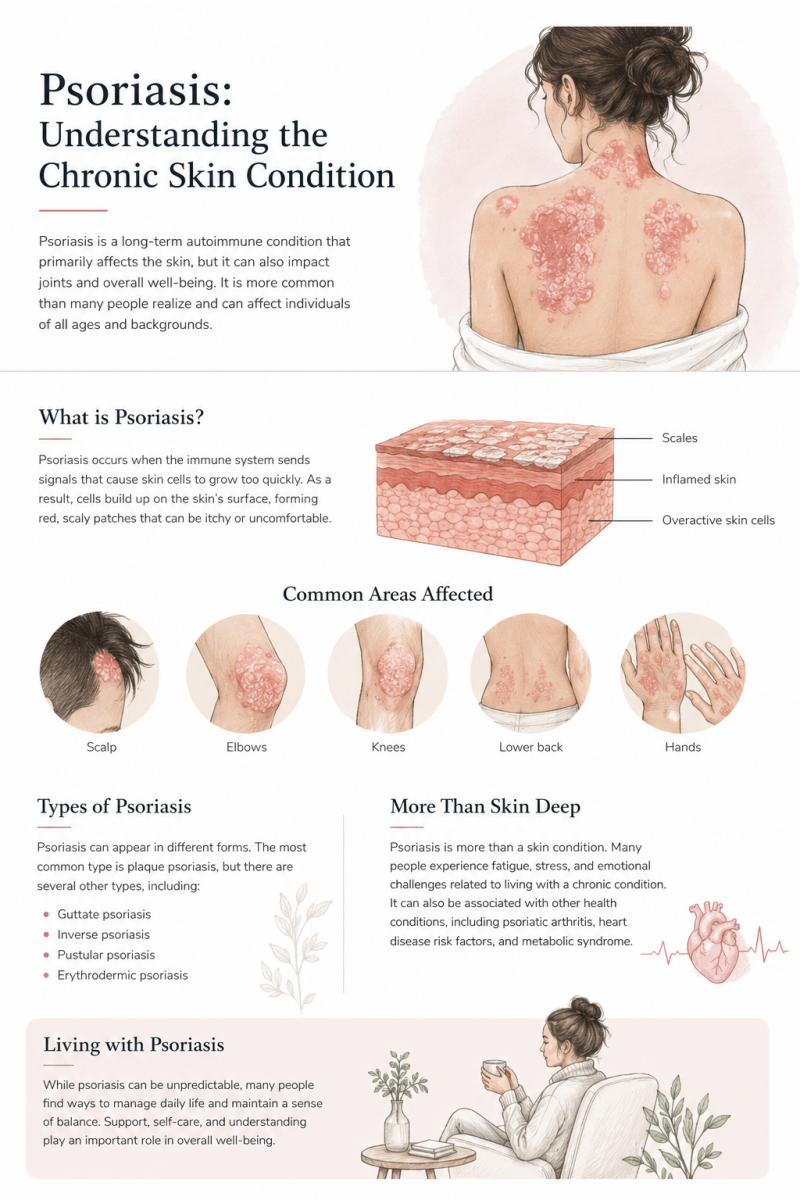
Psoriasis is a long-term inflammatory skin condition that causes skin cells to build up more quickly than normal. This rapid turnover leads to thick, scaly patches that may appear red, silvery, dry, or itchy. The condition can affect people of all ages and often develops in cycles, with symptoms appearing for weeks or months before improving temporarily.
Although psoriasis is not contagious, it can significantly affect a person’s comfort, confidence, and daily life.
What Causes Psoriasis?
Psoriasis is considered an immune-mediated condition. In people with psoriasis, the immune system mistakenly speeds up the production of skin cells. Normally, skin cells renew gradually over several weeks, but with psoriasis this process can happen within days.
Several factors may contribute to the development of psoriasis, including:
- Genetic predisposition
- Immune system dysfunction
- Stress
- Skin injuries
- Weather changes
- Certain medications
- Smoking and alcohol consumption
Researchers continue to study how genetics and environmental triggers interact in psoriasis development.
Common Symptoms of Psoriasis
Symptoms can vary from mild to severe depending on the individual and the type of psoriasis involved.
Typical signs include:
- Thickened patches of skin
- Silvery-white scales
- Dry or cracked skin
- Itching or burning sensations
- Red or inflamed areas
- Flaking of the scalp
- Nail changes such as pitting or discoloration
Some individuals may experience discomfort, while others notice only mild skin irritation.
Types of Psoriasis
Plaque Psoriasis
The most common form, characterized by raised, scaly patches on the skin.

Scalp Psoriasis
Affects the scalp and may resemble severe dandruff.
Guttate Psoriasis
Often appears as small drop-shaped spots on the skin, commonly after infections.
Inverse Psoriasis
Develops in skin folds such as under the arms, breasts, or groin.
Pustular Psoriasis
A less common form involving white pustules surrounded by red skin.
Erythrodermic Psoriasis
A rare but serious type that causes widespread redness and shedding of the skin.
Areas Commonly Affected
Psoriasis may appear anywhere on the body, but it most frequently affects:
- Elbows
- Knees
- Scalp
- Lower back
- Hands and feet
- Nails
Some people also experience joint discomfort associated with psoriatic arthritis.
Psoriasis and Daily Life
Living with psoriasis can impact emotional well-being as much as physical comfort. Visible skin changes may affect self-esteem, social interactions, and mental health. Many people report increased stress, embarrassment, or frustration during flare-ups.
Awareness and education are important in reducing stigma and helping individuals feel more supported.
Is Psoriasis Contagious?
One of the most common misconceptions is that psoriasis can spread through touch. Psoriasis is not contagious and cannot be passed from person to person through physical contact, sharing items, or close interaction.
When to Seek Medical Advice
Anyone experiencing persistent skin irritation, thick scaly patches, or unexplained redness should consult a qualified dermatologist for proper evaluation. Early assessment can help identify the condition accurately and rule out other skin disorders.
Conclusion
Psoriasis is a chronic skin condition linked to immune system activity and accelerated skin cell growth. While symptoms and severity vary, understanding the condition can help improve awareness and reduce misconceptions. Recognizing the signs early and seeking professional guidance are important steps for long-term skin health.
.jpg)
.png)
.png)
.png)


