
.png)
Psoriasis Skin Disease: Causes, Symptoms, and Daily Impact
Skin health plays an important role in overall well-being, yet millions of people worldwide live with chronic skin conditions that can affect both physical comfort and emotional confidence. One of the most recognized inflammatory skin disorders is psoriasis, a condition known for causing thick, scaly patches on different areas of the body.
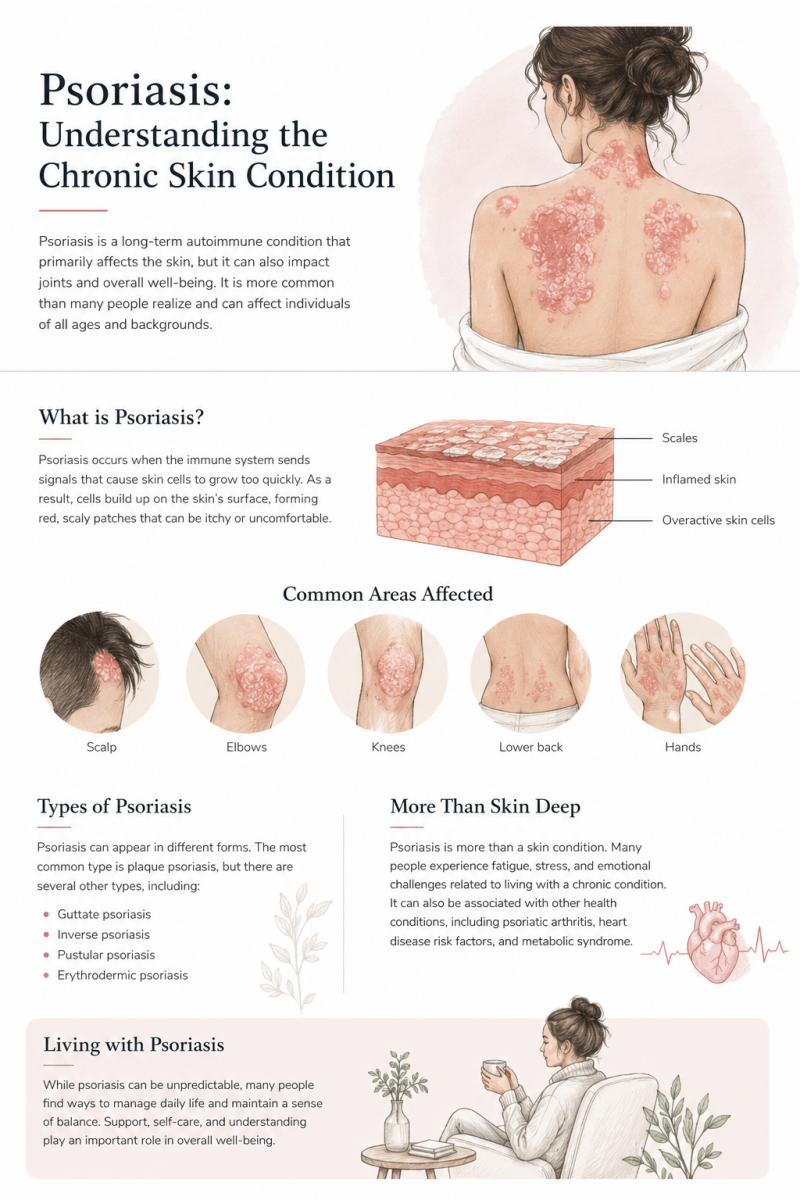
Psoriasis is a non-contagious autoimmune-related condition that speeds up the life cycle of skin cells. As a result, cells accumulate rapidly on the surface of the skin, forming visible plaques and irritation. The severity can vary greatly from person to person, ranging from mild dryness to widespread inflammation.

Understanding Psoriasis
Under normal conditions, skin cells gradually grow and shed over several weeks. In psoriasis, this process becomes accelerated, causing excess skin cells to pile up before the body can naturally remove them.
The condition is closely linked to immune system activity and genetic factors. While the exact cause is still being researched, scientists believe that both hereditary and environmental influences contribute to its development.
Common triggering factors may include:
- Emotional stress
- Cold or dry weather
- Skin injuries
- Infections
- Smoking habits
- Certain medications
Psoriasis can appear at any age, although it is commonly diagnosed in early adulthood.
Recognizable Symptoms
The appearance of psoriasis differs among individuals, but several symptoms are commonly observed.
Typical signs may include:
- Red inflamed patches of skin
- Thick silvery scales
- Dry or cracked areas
- Persistent itching
- Burning sensations
- Flaking on the scalp
- Changes in fingernails or toenails
Symptoms often develop in cycles, with flare-ups followed by periods of improvement.
Different Forms of Psoriasis
Plaque Psoriasis
This is the most common type and usually appears as raised, scaly patches on the elbows, knees, scalp, or lower back.
Scalp Psoriasis
Scalp psoriasis may cause redness, flaking, and thick scales around the hairline.
Guttate Psoriasis
Characterized by small drop-like spots that often appear suddenly after infections.
Inverse Psoriasis
Usually found in body folds where skin rubs together, such as the underarms or groin area.
Pustular Psoriasis
A less frequent form involving pus-filled bumps surrounded by inflamed skin.
Erythrodermic Psoriasis
A severe and uncommon form that can affect large portions of the body with intense redness and peeling.
Commonly Affected Areas
Psoriasis can develop on many parts of the body, including:
- Scalp
- Elbows
- Knees
- Lower back
- Hands and feet
- Nails
In some cases, individuals may also experience joint-related symptoms associated with psoriatic arthritis.
Emotional and Social Effects
Beyond physical symptoms, psoriasis may influence emotional health and social confidence. Visible skin changes sometimes lead to embarrassment, anxiety, or reduced self-esteem. Stress itself can also contribute to symptom flare-ups, creating a challenging cycle for many individuals.
Greater public awareness can help reduce misunderstanding and encourage supportive environments for people living with chronic skin conditions.
Important Facts About Psoriasis
Many people mistakenly believe psoriasis is infectious. In reality, psoriasis cannot spread through touch, shared objects, or close personal contact.
The condition is chronic, meaning symptoms may come and go over time. Early recognition of unusual skin changes is important for obtaining accurate medical evaluation.
Conclusion
Psoriasis is a chronic inflammatory skin disorder associated with rapid skin cell buildup and immune system dysfunction. Its symptoms can range from mild irritation to extensive skin involvement, affecting both physical and emotional well-being. Understanding psoriasis helps improve awareness, reduce stigma, and encourage better support for individuals living with this long-term condition
.jpg)
.png)
.png)
.png)


