
.png)
Living With Psoriasis: Understanding a Long-Term Skin Condition
Introduction
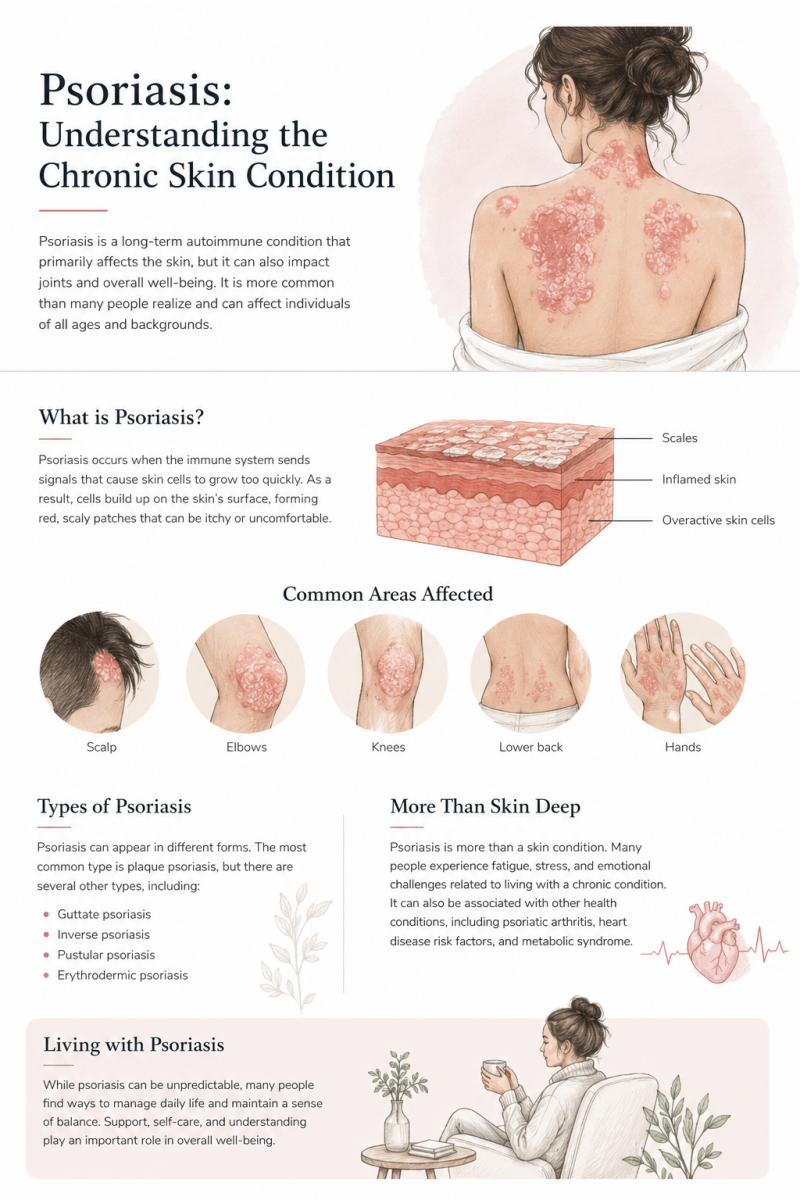
Psoriasis is a chronic skin condition that causes inflammation, scaling, and visible skin changes. It develops when skin cells regenerate much faster than normal, leading to thickened patches that may appear red, dry, or flaky.
Although psoriasis mainly affects the skin, it can also influence confidence, comfort, and everyday life. The condition is not contagious, and it can affect individuals of different ages and backgrounds.
Some people experience mild symptoms that come and go occasionally, while others may face recurring flare-ups that involve larger areas of the body.
.png)
What Happens in Psoriasis?
The skin naturally renews itself through a gradual process of cell growth and shedding. In psoriasis, this cycle becomes overactive.
Instead of shedding normally, skin cells accumulate rapidly on the surface. This buildup creates noticeable plaques and irritation.
Common skin changes may include:
- Thickened skin patches
- Red or inflamed areas
- Silvery or white scaling
- Dryness and cracking
- Itching or burning sensations
Symptoms can differ greatly from one person to another.
Areas Commonly Affected
Psoriasis may develop almost anywhere on the body, but certain regions are more frequently involved.
Scalp
Scalp psoriasis often causes flaky scaling and visible redness around the hairline.
Knees and Elbows
These areas are commonly affected by thick plaque formation.
Lower Back
Dry and irritated patches may appear across the lower back.
Hands and Feet
Some individuals experience peeling skin, discomfort, or sensitivity on the palms and soles.
Nails
Nail psoriasis may cause discoloration, thickening, or small dents on the nail surface.
Different Forms of Psoriasis
Psoriasis exists in multiple forms, each with distinct characteristics.
Plaque Psoriasis
The most common type, identified by raised patches covered with scales.
Guttate Psoriasis
Appears as smaller drop-like spots that spread across the skin.
Inverse Psoriasis
Usually develops within body folds and may appear smoother than plaque psoriasis.
Pustular Psoriasis
Characterized by pus-filled bumps surrounded by inflamed skin.
Erythrodermic Psoriasis
A rare form linked to widespread redness, irritation, and peeling skin.
Factors That May Trigger Flare-Ups
Researchers believe psoriasis is associated with immune system activity and genetic influence. Certain environmental or lifestyle factors may trigger symptom flare-ups.
Possible triggers include:
- Emotional stress
- Cold temperatures
- Skin injuries
- Certain illnesses
- Smoking
- Heavy alcohol intake
Triggers are not identical for everyone, and symptoms may change over time.
Emotional Effects of Psoriasis
Living with a visible skin condition can sometimes affect emotional well-being. Some individuals may feel uncomfortable in social settings or become frustrated during periods of worsening symptoms.
Psoriasis may impact:
- Confidence levels
- Sleep quality
- Daily routines
- Clothing choices
- Workplace interactions
Support and awareness can help reduce misunderstanding around chronic skin disorders.
Psoriasis and Inflammation
Psoriasis is considered an inflammatory condition connected to immune activity within the body. Immune signals mistakenly accelerate skin cell production, contributing to visible plaques and irritation.
This is why psoriasis is recognized as more than a simple cosmetic skin issue.
Seeking Medical Assessment
Persistent skin scaling, redness, or irritation should be evaluated by a healthcare professional. Psoriasis can resemble other conditions such as eczema or fungal infections, making professional assessment important for accurate identification.
Conclusion
Psoriasis is a long-term inflammatory skin condition associated with rapid skin cell buildup and visible plaques. Symptoms may range from mild irritation to widespread scaling and discomfort.
Understanding psoriasis can help improve awareness and encourage greater support for people living with this chronic condition.
.jpg)
.png)
.png)
.png)


